
The topknot is the one thing about this family you can see from across the yard — and it is the one thing the written record cannot agree on. Three accounts, three different stories, and one older book that quietly complicates all of them.
Beamology CNC · families & Bloodlines
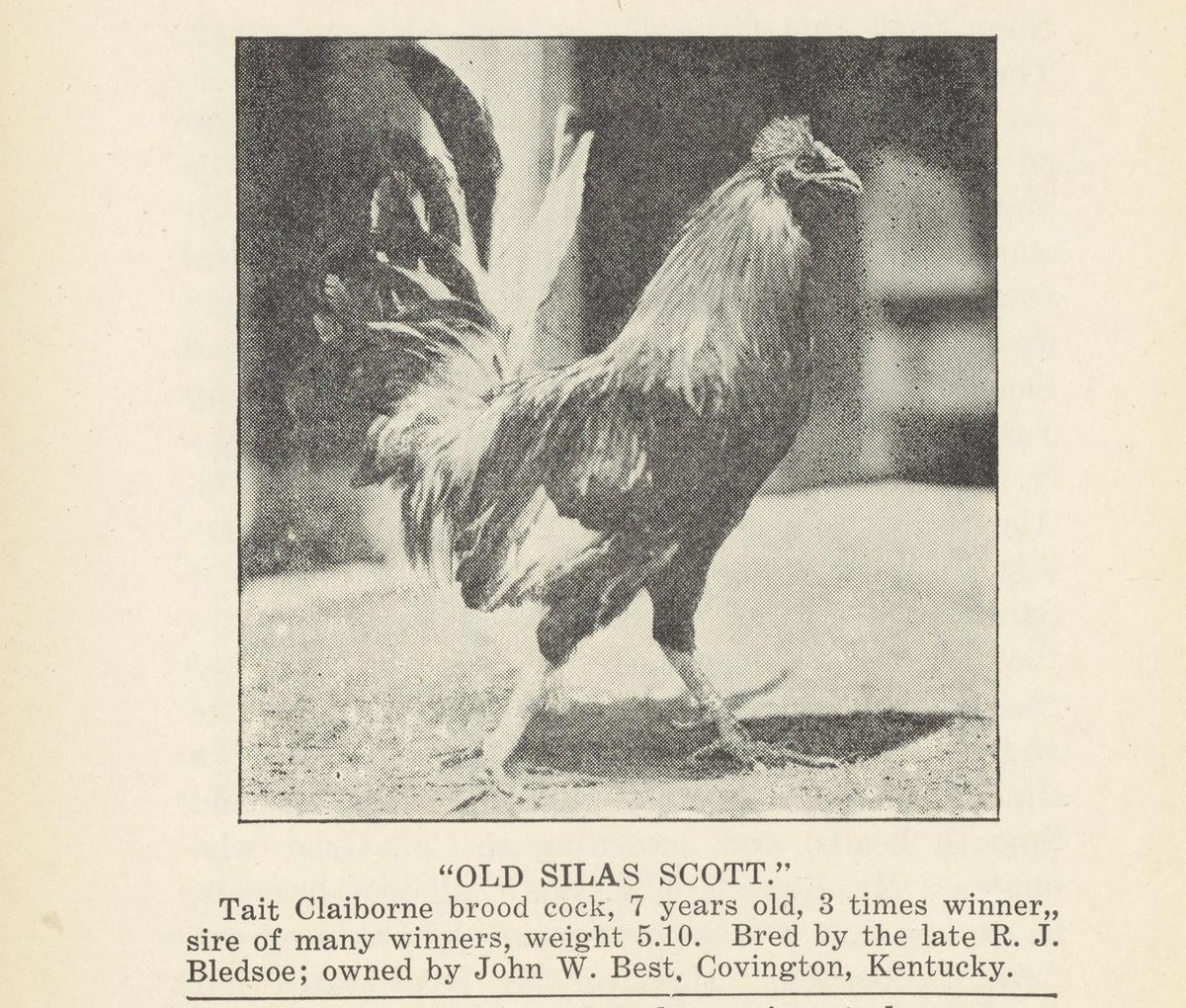
Page 77, Histories of Game Strains, 1928 · Cornell University Library
Ask where the Claiborne topknot came from and you will get a confident answer. Ask again somewhere else and you will get a different confident answer.
That is not a modern problem. It was already true in 1927, when Grit and Steel printed three separate histories of this family in the same volume, written by three men who all had standing, and let them contradict each other in print without a word of cleanup.
They disagree on the year. They disagree on the city. They disagree on whether the man the family is named for was a Judge or a General. And they disagree on the topknot — whether it was there from the first mating, or came in twenty-some years later.
What follows is what each of them actually said, laid beside each other, plus one earlier book that neither of them was writing against.
Before any of the 1927 accounts there is J. W. Cooper’s Game Fowls, Their Origin and History, published in 1869. Cooper was not repeating a story he had been told sixty years after the fact. He had the fowl in his hands. A trio was sent to him from Georgia in 1859, and he bred from them for years after.
His hens: rich, deep buff or dark red, small thin head, long neck, full breast, broad short back, and a tail wide and fan-like. His cocks: small round head, brilliant fiery eye, full hackled neck, wide sickled tail, long wings hanging low on the shank. Both sexes with a white or clear yellow beak, legs and claws.
Then the line that matters most.
“As a general thing both cocks and hens have a slight top-knot — though not always.”
— J. W. Cooper, M.D., 1869, describing fowl he received in 1859
That is 1869, describing fowl received in 1859. Hold onto it. It becomes the check on everything printed later.
Cooper thought the family was English over Spanish, guessed Lord Sefton for the English half, and offered one alternative: that they might be a sub-cross of the Baltimore Top-Knot. He was guessing, and he said so. But he was guessing at the right family, from the outside, ten years before most of the men in the 1927 accounts had fowl of their own.
The Baltimore Top-Knots were their own breed, and Cooper knew them firsthand — he had traded for a start of them and bred them himself.
They came from a Mr. Goss of Baltimore County, Maryland, who by Cooper’s account was one of those breeders fond of keeping his own counsel. Cooper tried to get a history of them and never could.
The physical notes are worth reading twice if you keep Claibornes. Mostly red-feathered with yellow legs, some carrying blue in breast and tail. Six to seven and a half pounds — a considerably bigger fowl than the Claiborne. Lofty, standing up well, taller than other fowl of the same weight, and some of them slim through the body for Cooper’s taste. And then the line that matters most: the hen’s topknot is frequently rather large, but the cock’s is invariably confined to a few feathers back of the comb.
That explains something a lot of breeders notice and nobody writes down: in this family the hens carry the crest and the cocks carry a suggestion of it. That is not drift and it is not a fault. That is the Baltimore fowl showing through, described that way in a book printed before the Civil War generation had aged out.
Notice the other half of it too. The topknot came out of a six-to-seven-pound fowl into a family that has been called moderately sized in every description of it for a hundred and sixty years. The crest carried. The frame did not.
Here they are in the order they were printed, each one in its own words.
Best had studied the family for twenty-five years and leaned heavily on B. F. Dyer of Weatherford, Texas, who he called the greatest living authority on them.
His version: a bright red English cock, white in tail and wings, of Earl of Derby type, went from Mr. Claiborne to James Sandford. In 1841 Sandford took him and a hen to John Morrison’s at Mobile, Alabama and produced the first of the family — the Smooth heads.
Then, satisfied with what he had, Sandford took that same old Derby cock and mated him to five or six pure Baltimore Tassel hens. Out of that came the Tassel Claibornes.
So in Best’s telling the two heads were separate from the start, out of the same cock, from two different sets of hens. The tassel is not a later infusion. It is the second half of the founding.
The foundation hen he would not settle. Some said pure Spanish and black. Others put her on the Irish side. Others tied her to the same blood as Little India of Warhorse fame. Best’s own information was that her brothers were spangles and black-breasted reds out of the Baron Street pit in New Orleans, and that Sandford laughed when he was asked whether she was Spanish. Take that for what it is rather than record.
Flanagan told it differently in almost every particular.
About 1855, Jim Sanford crossed an Earl Derby cock over a black Spanish hen, then bred the Derby back over the cross — three quarters Derby, one quarter Spanish. Those came black-breasted red, yellow legs, red eyes. They were fought by Sanford and Gen. Claiborne, from whom they took the name.
Then, about 1865, ten years on: Tait and Grissett bred a Baltimore Topknot cock over some of the hens, then the Claiborne cock back over the cross — leaving the fowl at roughly one quarter Baltimore Topknot, nine sixteenths Earl Derby, three sixteenths Black Spanish. After that mating, he says, cocks and hens both came with topknots or tassels.
He puts the founding in New Orleans, not Mobile, and has Sanford dying there in 1872.
He is also the one who draws the clean line: the smooth head Claiborne became known as the Everett Claiborne and did not carry the Baltimore Topknot blood. The tasseled fowl carried the Grissett and Tait names.
Cooper had tasseled Claibornes in his hands in 1859 and published the description in 1869.
Flanagan’s Baltimore Topknot infusion is dated to about 1865.
Those two things cannot both be right the way they are written. Either Flanagan’s date is off — he was writing about events fifty and sixty years past, and “about 1865” is the kind of number that sounds like the memory of a number — or the tassel was in the family earlier than he thought, which is exactly what Best says.
We are not issuing a verdict on it. The best practice is to lay all three descriptions beside each other and draw your own conclusion from the sum of what is actually written down, and from what each man was in a position to know firsthand.
The names get used loosely today, so here is the chain as the 1927 accounts give it. Every step is a transfer between named men, which is the only reason any of it can be followed at all.
Sandford made both heads, and by Best’s account he was not a practical breeder himself. His sister, Mrs. Sallie Davis, bred the Smooth heads pure for him; his brother John did the same with the Tassels.
In 1845, Louis Everette bought a yard of the Tassels from Sandford and placed them with Ben Grissette on the Alabama river. The two fell out, and Everette sold his interest to Bob and Felix Tait. Grissette then put a Smooth head cock over his Tassels and called the result Grissette Claibornes. Everette got a trio of Smooth heads from Sandford and bred them at Dick Harrison’s place at Benton, Alabama — those became the Everette Claibornes, the smooth-headed side.
Bob Tait kept his Tassels pure until his death. After that Felix (Major) Tait brought Smooth head cocks in on them, which in Best’s words is why so many Tait breeders still get some Smooth heads occasionally. Worth knowing before you cull something over it. C. E. Tait, Felix’s son, carried the old Taits on after his father until his own death in 1915, with his sister Mrs. Lally Tait Bragg helping with the fowl.
The tasseled fowl went west in 1873, when Grissett moved to Texas with them. Capt. W. H. Love got a pen from him in 1875 at Austin. In 1878 Love went looking for new blood, and C. A. Kuechler bought a trio of his oldest fowl and bred them pure from then on — never a drop of new blood, by Flanagan’s account. Flanagan’s own comment on that: whether this was a wise policy I can’t say.
So a topknot showing up in a Tait yard, or a smooth head showing up where somebody expected a tassel, has been normal in this family since the 1880s. It is written into the transfers.
Spelling drifts across the sources the same way. Sandford and Sanford. Grissette and Grissett. Judge and General. Same men. Nobody has ever resolved it, and this page is not going to pick one and pretend.
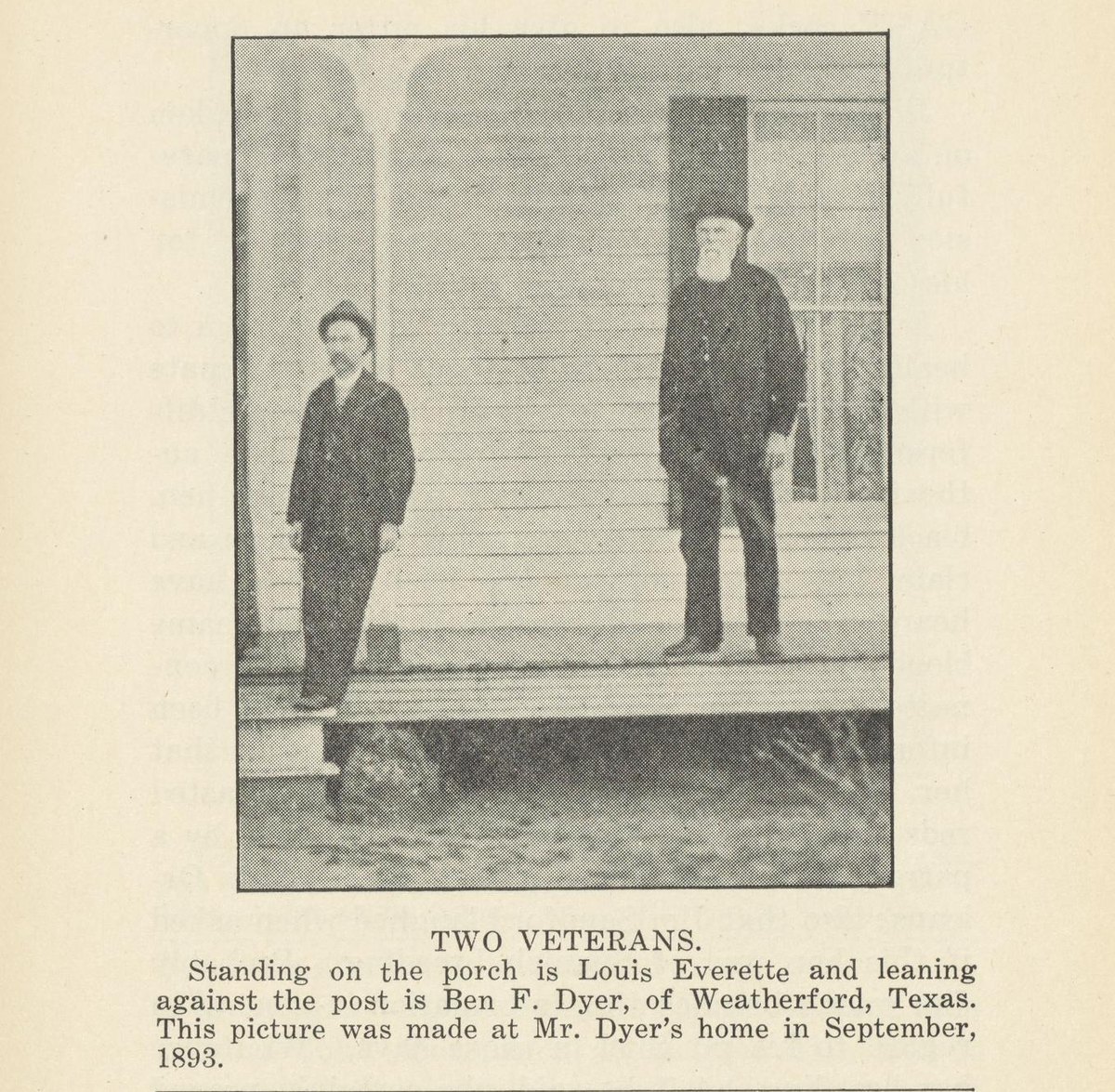
Page 75, Histories of Game Strains, 1928 · Cornell University Library
The descriptions across sixty years of print are remarkably consistent, which is not something you can say about most families.
The cock. Fiery red or black-breasted red, with white showing in the wing and in long white tail streamers. Best describes plumage draped over the back like fine lace, wings carried low, and a blue-black lustre on the wing coverts. Red eyes. Yellow legs in most accounts, white legs in some, including the original imported cock.
The hen. Wheaten buff, sometimes running to a deep dark red, with a wide fan tail, small thin head, long neck, and an eye everybody who wrote about her mentioned. Cooper noted the hens generally carry long keen spurs, which he put down to the Spanish side.
The Tait hen specifically, per Best: similar in color to the Everette but a bit more trim, a bit more nervous, and inclined to start something at every opportunity. He compared her to a bobbed hair girl with her heavy hood or tassel.
Off-colors that are still Claiborne. Flanagan reported that some come spangle, and that once in a great while you get a brass back — he calls it a cry-back — and that in thirty years of breeding they raised exactly two. If you get one you have not necessarily got a problem. You may have got the family reaching back.
Mothering. Best said Claiborne hens make the best of mothers and will often carry chicks until they are nearly as big as she is. Cooper’s fowl and Boyce’s fowl both drew the same note.
Longevity. Dyer had a hen that hatched in May 1908 and died in April 1923. Best mentions her because it was unusual even then.
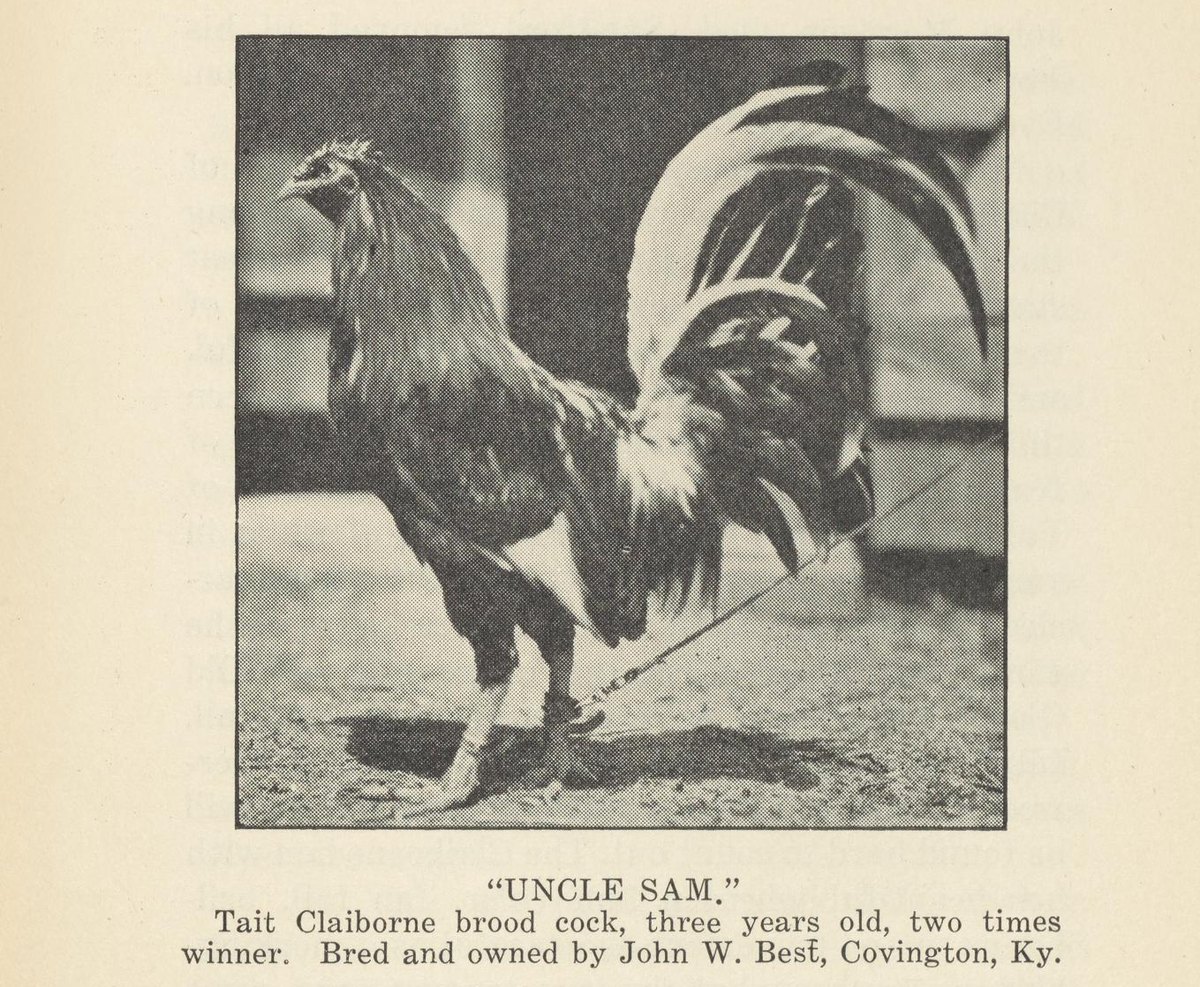
Page 79, Histories of Game Strains, 1928 · Cornell University Library
There is a scattered but consistent thread through the 1927 volume worth pulling on. In the histories of other families, Claiborne blood keeps turning up at a quarter — and the tassel keeps coming with it.
A light-red cock in the Johnston fowl, three quarters Mug and one quarter Claiborne, had a tassel. A light-red Tassel-Claiborne cock called Old Pride went onto the Johnston Fardowns and left blood men were still naming decades later. Other chapters report wheaten hens with red necks and yellow legs turning up generations after a Claiborne cross.
A trait that still shows at one quarter is behaving the way a dominant trait behaves. We are not going to call it settled genetics on the strength of a 1927 anecdote — but if you cross a Toppy onto something smooth-headed and a share of the chicks come up with a few feathers behind the comb, you are seeing what men were writing about a century ago, and you did not do anything wrong.
Best’s warning runs the other direction, and it still applies.
“Not every game cock sporting a white feather in his tail is a Claiborne — not by a jugful.”
— John W. Best, 1927
The most useful thing in the whole Claiborne record has nothing to do with origin. It is G. W. Boyce of Salamanca, New York, who bought a trio of Smooth heads around 1875 from a man in Ypsilanti, Michigan whose address he got out of the Police Gazette, and who was still breeding them when he sat for a photograph after his seventieth birthday.
He was straight about what he was writing. Not a history, he said — only a report of his own fowl and how he perpetuates them. Which is exactly why it is the part that survived best.
They were rather small, he said, but as perfect as wild fowl. Hens wheaten. The cock bright red with white under color and white in wings and tail, red eyes, yellow legs.
He added twice, deliberately, and then stopped: fowl from George Long of Texas — broader across the breast, heavier and longer in the wing, arching the neck more, same color and size but a bit heavier in plumage — and later a trio from Dr. Cabell of Hot Springs, Arkansas.
He bought from others over the years and culled every one of them. Some did not look right to him. Some lacked what he wanted. One bunch was clean on everything he cared about but threw duck-toed chicks, the back toe curling around to the side of the foot, and out they went.
Then he laid the three families out in a system, and this is the part to read slowly.
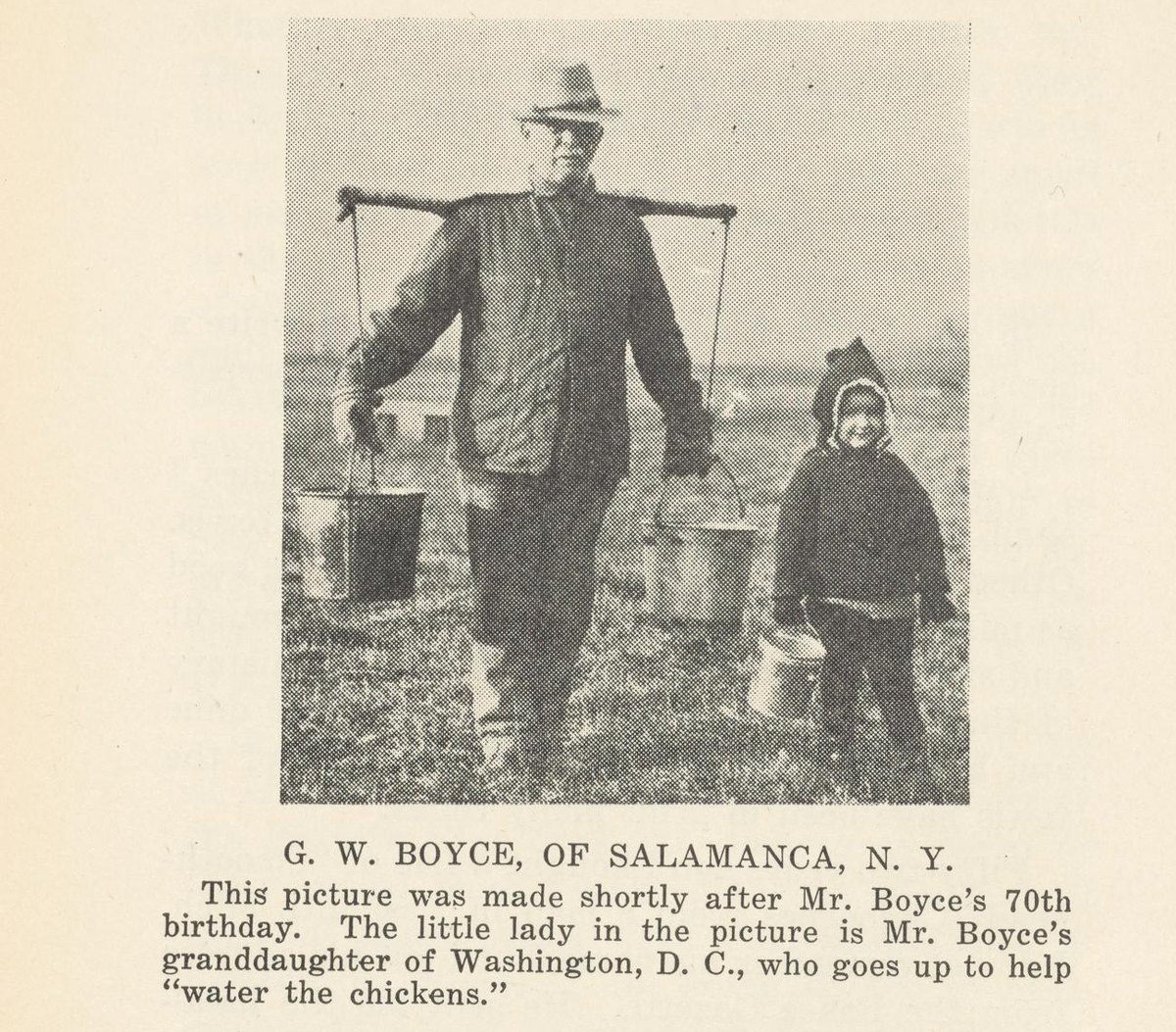
Page 88, Histories of Game Strains, 1928 · Cornell University Library
“Today, I have 25 pure Claiborne hens for breeding. These hens are in five yards, under lock and key. Five hens in each yard, full sisters, and the cock in each yard was bred in one of the other yards, so no cock can be much related to his hens. If I have 200 chicks in the fall, no man could pick the chickens from any one yard by their looks.”
— G. W. Boyce, 1927
And his own name for it.
“This is not in-breeding, or line-breeding, but is right and safe breeding, if you want to perpetuate a family or breed. This means study, work and endless vigilance and care, but it brings results.”
— G. W. Boyce, 1927
Five sibling groups. Five sires, each bred somewhere else inside the same system. A cap on how many he would raise, because two hundred was what one man could actually put eyes on. And a family that stayed recognizable across five decades in one set of hands.
That is not purity — he added twice and culled constantly. That is maintenance, and it is the reason we know more about his fowl than about almost anybody else’s in the book.
One more thing worth saying plainly. The word outlived the family. Toppy is still in use — a chicken with a crest — and most of the men using it today are not thinking about Mobile at all. Somewhere in the last hundred years it stopped meaning a Claiborne. That is not a complaint. It is just where the record broke, and it is the piece most worth filling in.
If you have Claibornes, or Toppies you can trace, or anything at all on where they went after 1930 — that belongs here. Send it and it goes on the page with your name on it.
Three men wrote down the history of this family in the same volume and could not agree on the decade, the city, or the man’s title.
They were not careless. Best had studied it for twenty-five years. Flanagan had been at the Grissetts since 1878. Both were writing about things that happened before they were born, from letters and from what old men had told them, and neither had a single page written at the time.
And then there is Boyce, who does not tell you where the family came from at all — because he is too busy telling you exactly what he bought, from whom, in what year, what he culled and why, and precisely how his twenty-five hens sat in five yards.
We know more about G. W. Boyce’s fowl in 1927 than we know about Jim Sandford’s in 1841. Not because his were better. Because he wrote it down.
Best said it in one line about this family, and it applies to every other one: the Claiborne, like any other strain, is no better than their master breeds them.
The biggest difference between peddled fowl and a well-maintained, well-documented family has never been the blood. It is whether anybody can tell you what they have, who they got them from, how long they have had them, and what has or hasn’t been added in the time they have been maintaining them.
That record is always the first thing to go. It goes when a good brood cock dies and nobody wrote down which hens he was under. It goes when a yard changes hands. It goes in one bad winter.
Bands are how you hold onto it — numbered, engraved with your farm name, in a range you control. The chicken and the record become the same object, and the answer to “which family is that” is on the leg instead of in somebody’s memory.
This article is built on two published sources, both public domain, and it says which one each claim comes from because they do not agree with each other.
J. W. Cooper, M.D., Game Fowls, Their Origin and History (1869) — the Claiborne and Baltimore Top-Knot chapters, describing fowl Cooper received in 1859 and bred himself. And Histories of Game Strains (Grit and Steel, Gaffney, South Carolina, 1928; chapters written 1927) — three separate Claiborne accounts, by John W. Best, John C. Flanagan, and G. W. Boyce.
Every quotation above comes from one of those two books. Historical detail is reported as history, in the words of the men who wrote it, in past tense. Where a source is the only voice on a point, this page says so.
Every change to this page gets logged here with its date, including the ones that come from readers. If something here is wrong, say so. It gets fixed.
9 September 2026 — First version.
Photographs: plate scans from the 1928 Grit and Steel volume, courtesy of the Cornell University Library and the Biodiversity Heritage Library. Public domain.