
A green-legged Tennessee family with a mixed foundation, a name that started life as a nose-mark, and fifty years of history carried almost entirely by mouth — which is exactly why it gets argued about.
Beamology CNC · families & Bloodlines
Penny is a name that travels further than the fowl behind it. Two roosters can both be honestly called Penny and still be four generations and two very different breeding programs apart. That is not a knock on the family. It is what happens to any composite line that spreads far enough and gets held long enough by enough different hands.
Most families that last this long have a document somewhere behind them. A man wrote a letter to a trade paper, or kept a ledger, or paid for a photograph, and a century later you can still read it and check yourself against it. The Penny Hatch has none of that. Sherill Penny built the family, sold out of it for years, and as far as anybody has ever produced, never wrote down what went into it.
Fifty years, four states, and not one page of it in the hand of the man who made it.
What stands in for the record is people. Breeders who bought fowl off him, men who watched his son show, men who have held the same family twenty and thirty years and can tell you exactly who handed them what. Cross-check enough of them and the same handful of facts keep coming back — and the same three or four questions keep coming up empty.
This page is the overlap, and it is explicit about where the overlap ends. So the useful question is never whether a chicken is pure “Penny”. It is which line, from whom, how long and how well has it been maintained. Everything below is written with that in mind.
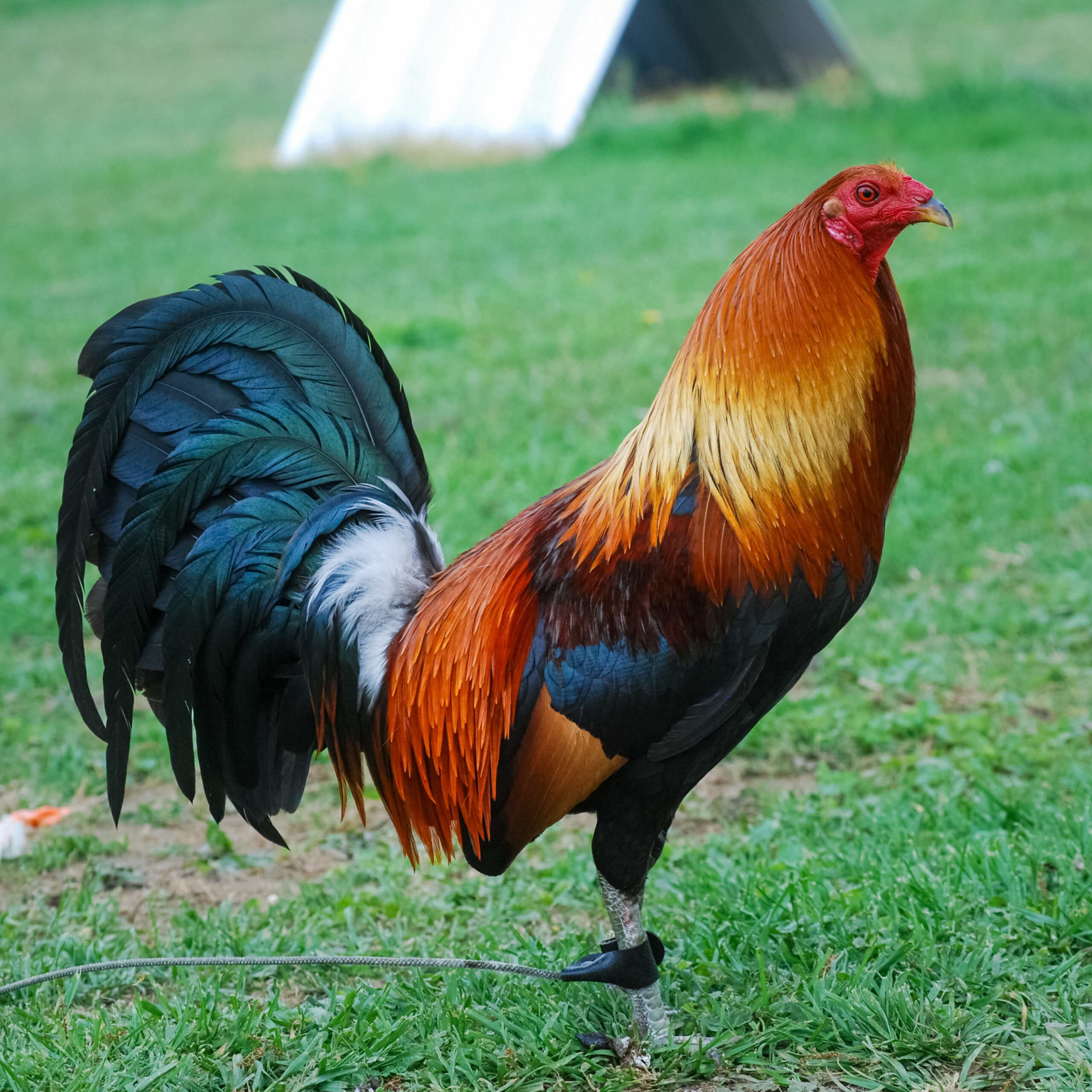
lemon necked Penny hatch cock
Sherill Penny kept fowl at Soddy Daisy, Tennessee, in the hills north of Chattanooga. Even his name is unsettled — it turns up written Sherill, Sheryl and Sherll by men who all knew him and all meant the same person. He did not inherit a family. He built one out of Hatch blood and at least one other Non-Hatch family, then bred it in a single direction long enough that it became a type.
The farm is still standing. The fowl have been gone off it for years. That gap — a place you can still drive past and a family you can no longer get at the source — is most of why the name gets used the way it does.
Sometime in the 1970s Penny brought a man down from Oklahoma named Jimmy Johnson and kept him about four years, and the two of them set the brood pens. What came out of that work did not get called Penny Hatch. It got called Left Nose Hatch, and the reason is as plain as it sounds: the fowl out of that pen were marked in the left nostril.
That is a working system, not a brand. A nose mark gives you left, right, or both — three pens off one tool. Put a toe punch with it and the sixteen combinations a punch gives you turn into sixty-four. Joe Goode ran the same idea and had fowl people still call doublenose. Nobody was naming a family. They were telling one pen from another at a glance, in the dark, with a chicken in one hand.
Then he started selling them, and the name went out the gate with them. The name was once precisely accurate. It told you which pen a chicken came out of, and nothing more.
It stopped being accurate the day it became something to sell under.
Ruble is the one component nobody argues about. Every account that gets specific puts Ruble Hatch in the foundation, and no account contradicts it.
After that it thins out fast. Claret, Blueface and McLean Hatch all get named by breeders with standing, and not one of them can date it or give you the proportions. The Claret fraction usually gets put at an eighth, which is the kind of number that sounds like the memory of a number. Whether all three went in, whether they went in at the same time, and whether some of it arrived later through somebody else’s yard rather than Penny’s — nobody has produced an answer that a second breeder will stand behind.
A correction that gets repeated wrong. Leiper is not a Hatch family. Judge Leiper’s fowl were built on Kearney Whitehackle and Kearney Brownred. Penny and Leiper get compared constantly and crossed often, but they are not two branches of the same tree.
The men who could have settled the cross are dead. Tom Dale is dead. One breeder who was close to the source remembers being told it was a three-way cross. Another, just as close, remembers two. Both are telling the truth about what they were told. Neither of them was standing in the pen.
Ask a man who has had them thirty years what the exact formula was and you tend to get a version of the same answer. So who knows. He does know he likes them.
Terry Penny showed at Boxwood and at Sunset with a partner named Neal, and the men who watched those shows are the best physical record this family has. They were looking at fowl bred at the source, in numbers, in daylight.
Tom Dale carried them to Hawaii, which is the widest single jump the family ever made and the reason Dale fowl turn up in so many chains today. Herman Pinnon gets named as a distribution point often enough to be worth repeating, and never by anybody who can put a date on it.
Everything after that seems to dilute. The family stopped moving as one thing and started moving as lines.
Long, because this is the part of the record that actually survived. Nobody wrote the breeding down, but a great many people have had one of these in their hands, and they agree with each other more than they disagree.
Green legs, near-universal, running from dark green to a lighter green with a pale web. Dark red to mahogany, running toward wine. Compact and heavy for size. Low to medium station, thick-boned, deep through the body. Nobody describes a correct Penny as lanky. Moderately Sized. A breeder who handled Penny fowl at the source in the 1980s put them at four to five pounds.
Pea comb predominant. Blue legs throw occasionally out of otherwise correct fowl. Worth knowing before you cull something over it.
Two things inside that standard get treated as faults when they are not:
They sit inside the family and always have. They come up as suspicious more often than they should, and the reason is mostly photographic — dark fowl photograph better, so dark fowl are what everybody has seen. A speck of white in a hackle is a speck, not speckling, and it has nothing to do with spangle.
A comb that is neither a clean pea nor a clean straight comb turns up in this family often enough that experienced breeders name it on sight. It is not evidence of anything by itself.
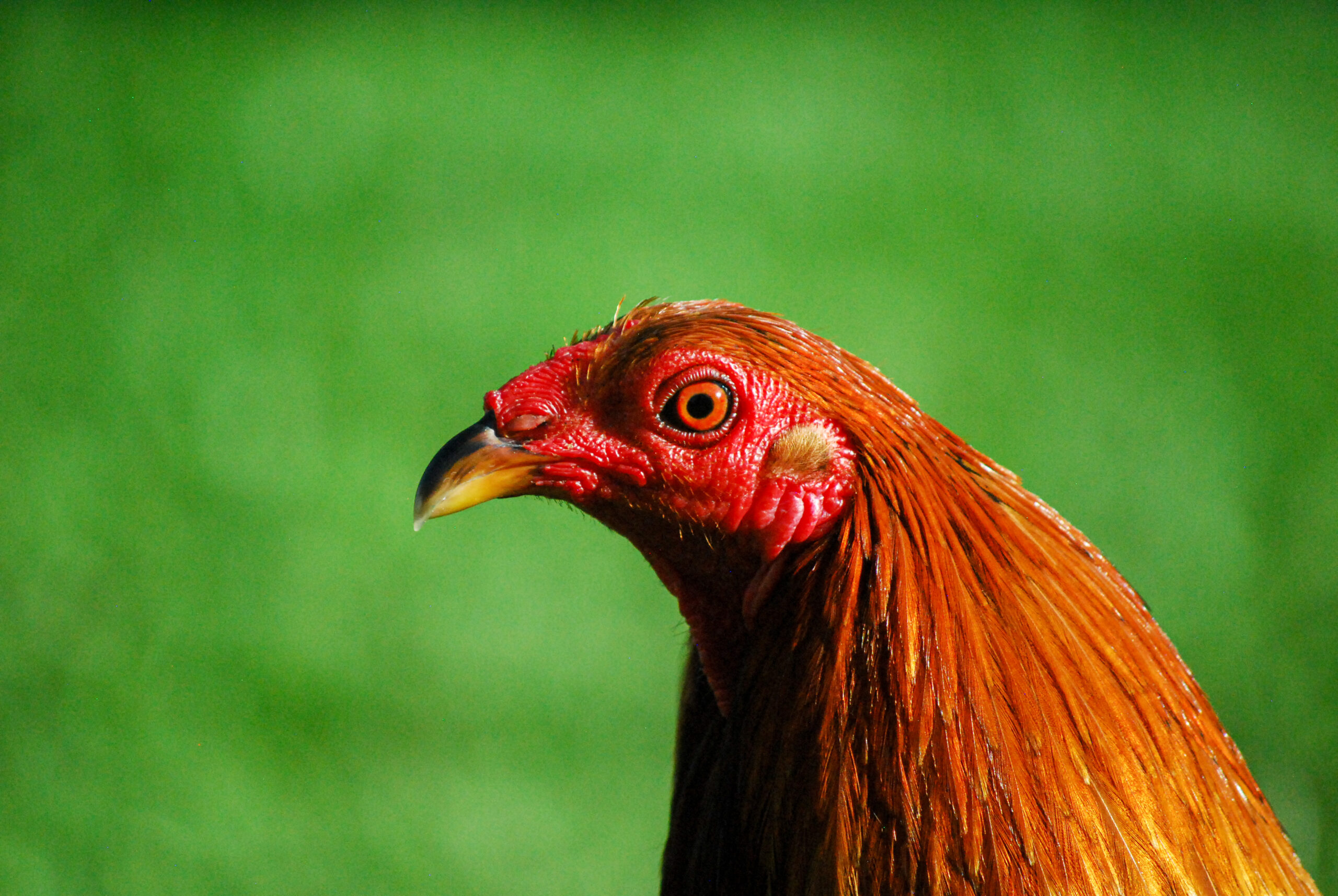
Lemon necked penny hatch cock
The most common reason a Penny gets the side-eye from one of us is their comb. “Pea comb, good. Straight comb, suspicious — probably crossed, probably not really Penny…right?”
Here is the problem with that. Pea comb is dominant. A pea-combed brood cock carrying the straight-comb gene, over two pea-combed hens carrying it, will hand you straight combs out of pure fowl — twenty stags on the ground and six of them straight is not a surprise, it is expected. A genuine outcross tends to announce itself in the F1, in the whole animal, not in one recessive turning up two years later. Tight breeding does the opposite: it surfaces what was already in there.
Which is why three honest breeders can tell you three different things about combs in this family and all three of them are telling the truth about their own yard. Even Doc Robinson fowl throw one now and then, and nobody is out there calling those crossed.
What that means in practice. Comb alone is an unreliable method of gauging what any given chicken is. The best practice is to draw your own conclusion from the sum of ALL traits that you see presented.
Gary Gilliam spangled Pennys exist and are held by people who know exactly what they have. Whether spangle was in the original foundation or came in later through somebody else’s yard is not settled, and anyone who tells you it is settled is telling you about their own confidence, not about the fowl.
What can be said: spangle in a Penny is not automatic evidence of a cross, and it is not automatic evidence of anything else either. It is one more trait to weigh against the rest of what is standing in front of you.
This is the part of the family nobody markets and everybody who keeps them mentions. Penny fowl carry aggression toward the person handling them — not just toward other fowl. It shows up in stags, it does not soften much with handling, and it is consistent enough across unrelated lines that it has to be read as a family trait rather than a yard problem.
Anybody selling you a Penny as an easy family to work around hasn’t had many.
Breeders who have kept them a long time select against it the same way they select against anything else — by not breeding the worst offenders, generation after generation, and accepting that they are giving up something else to do it. It is a slow project, and it is real.
The other route is a cross, and Leiper is the one named most often. It is worth being clear about what that means: it is a different set of fowl afterward. The trait comes down, and so does whatever else you were holding the family for.
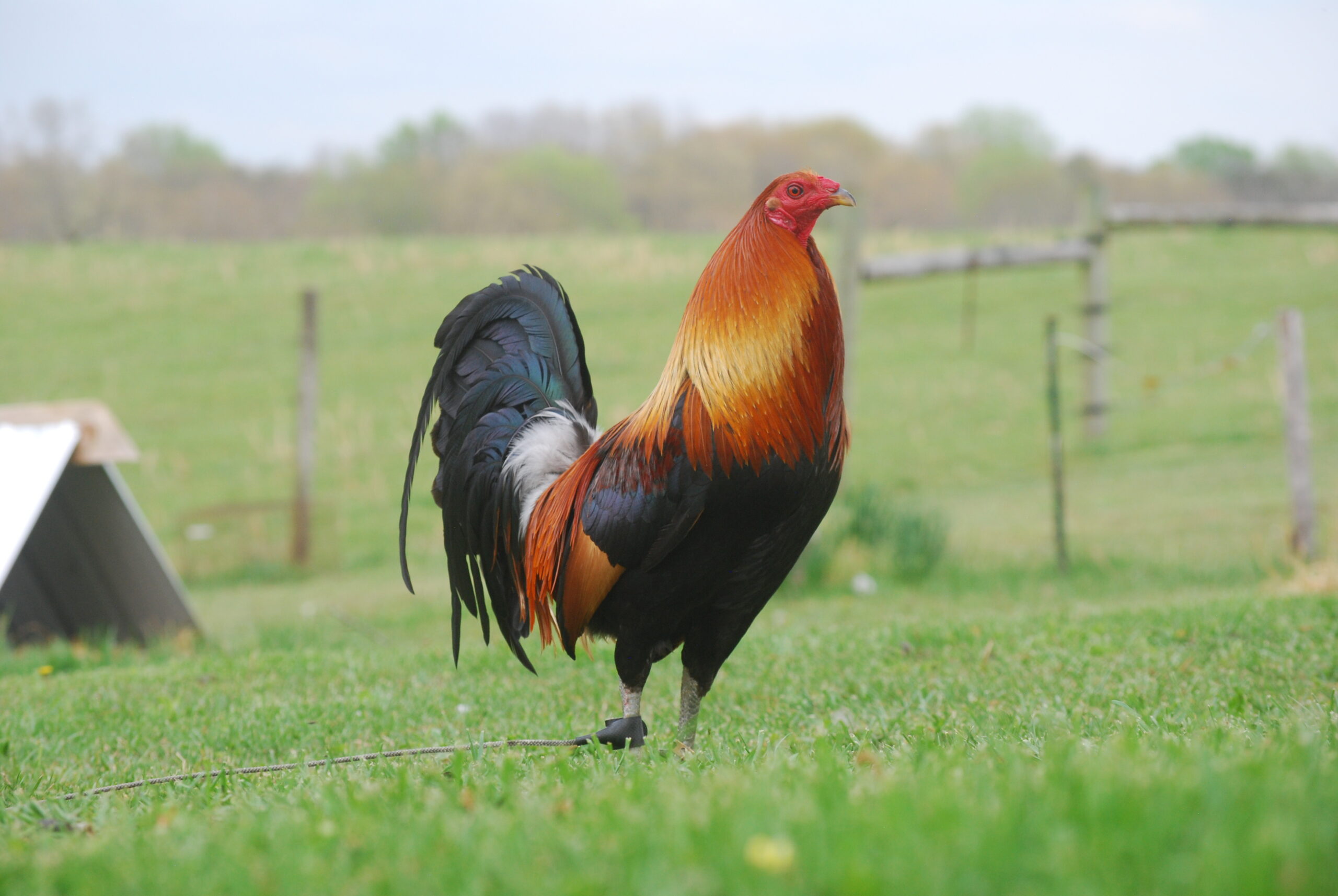
Lemon necked penny hatch cock
Penny is the family. What people actually keep are the lines inside it, and anyone who knows the fowl identifies by line first:
Soddy Daisy · Tom Hargus · Kirk McBryar · Tom Dale / Blackman · Gary Gilliam spangled · Alligator Ranch · Lindell · J. Tally — and several more held quietly and never advertised.
The clearest chain anyone has laid out runs:
Sherill Penny → Tom Dale → Tom Hargus → the present day breeder. Twenty-five years, nothing added.
Two other breeders corroborate the middle of that chain independently, which is about as good as it gets in a family with no paper behind it. That is what real records look like. A named source, a named chain, and a length of time.
It is worth noticing what that chain is not. It is not a purity claim. Nobody in it is saying the fowl are unchanged since 1975. They are saying who handed them what, when, and what has and has not been put in since. That is a smaller claim and a far more useful one.
The exact foundation cross — which families, in what proportions, in what year. Whether the Claret went in at an eighth or that number is just the one that got repeated. Whether McLean and Blueface both went in at the source or arrived later through another yard. When the Left Nose Hatch name gave way to Penny Hatch, and whether Penny made that call or his buyers did. What Herman Pinnon actually handled, and when. Where the spangle came from.
This guide is speculation too — held to the parts more than one man will say out loud. What nobody has laid out is the chain between then and now. If you have a piece of it, let us know, it belongs on the record.
There are families from this same century where a man wrote it all down — hens by weight, letters kept for a decade, photographs paid for — and a hundred years later you can still read it. Penny built something at least as good and left no page behind it. Same sport, same country, two endings. The difference was never the blood.
So when somebody hands you a rooster and calls it a Penny, the name is the least useful thing in the sentence. What you want is the rest of it. He can tell you which line he has, who he got them from, how long he’s had them and what has or hasn’t been added in the time he’s been maintaining them. That’s going to be the biggest difference between peddled fowl and a well-maintained/documented family.
And that record is always the first thing to go. It goes when a good brood cock dies and nobody wrote down which hens he was over. It goes when a yard changes hands. Thirty years of careful breeding can come apart in one winter of not writing things down.
Bands are how you hold onto it. Numbered, engraved with your farm name, in a range you control — so the chicken and the record are the same object, and the answer to “which line is that” is on the leg instead of in somebody’s memory.
There is no single document behind this family. Everything above is assembled from breeders who held the fowl, cross-checked against each other, and the page says so wherever only one man is the source. Where accounts contradict, both are given. Nothing here is a claim about anything living.
8 September 2026 — Left Nose Hatch origin and the nose-mark system added. 9 September 2026 — Full rewrite; sourcing note expanded, open questions restated.
Every change to this page gets logged here with its date, including the ones that come from readers. If something here is wrong, say so. It gets fixed.